
SKYCTC Alumni Spotlight - Dr. Maddy Rice
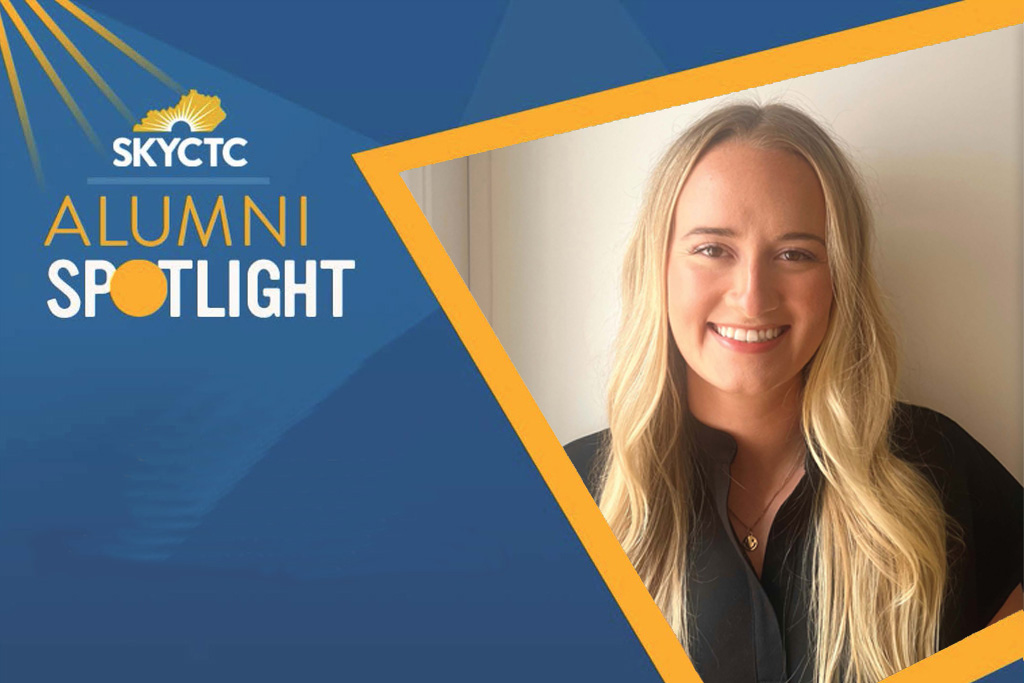
Dr. Maddy Rice began her college journey at SKYCTC as a dual credit student and continued taking classes after graduating high school, giving her an early and affordable start toward her healthcare career. Knowing she wanted to become an occupational therapist, she used her time at SKYCTC to build a strong academic foundation before continuing her education at Eastern Kentucky University, where she earned her Bachelor’s degree in Occupational Science in 2022 and her Doctorate in Occupational Therapy in 2024.
Today, Dr. Rice works as an Occupational Therapist at Owensboro Health Regional Hospital, helping patients regain independence in meaningful everyday activities.
WHY DID YOU CHOOSE TO ATTEND SKYCTC?
From the moment I graduated high school, I knew I wanted to pursue a career as an occupational therapist, a path that would require advanced education. I also recognized that this would mean many years in college, which would come with significant financial commitments. As I began researching potential graduate programs in occupational therapy, I quickly realized the reality of college tuition. This realization reinforced the importance of making sound financial decisions that would benefit my future.
I first became familiar with SKYCTC through dual enrollment classes I took while still in high school. Additionally, my grandfather, Terrell Murphy, had a 30-year career at SKYCTC as a professor in the HVAC program.
When I discovered that, with my GPA and the support of FAFSA, I could attend SKYCTC without incurring significant debt—possibly even receiving financial assistance—I knew without hesitation that this was the best option for me. It allowed me to pursue my education responsibly, setting a solid foundation for my future without starting my college career in debt.
WHO INFLUENCED YOU MOST DURING YOUR TIME AT SKYCTC (FACULTY/STAFF)?
Dr. Phil Neal served as the president of SKYCTC during my time there. He was always approachable and took the time to engage with students. On several occasions, I encountered him in the hallway, where he would stop to chat without any sense of hurry. He genuinely seemed interested in how my classes were going and asked thoughtful questions about my experiences.
What impressed me most was that his kindness and consideration extended beyond the campus. I would occasionally run into him outside of school, such as at my part-time job in a retail store, and he would approach me with the same warmth and attentiveness. Dr. Neal’s leadership style left a lasting impression on me. He exemplified the kind of leader I aspire to be—one who is not only professional but also personable and genuinely engaged with those they lead.
WHAT ADVICE DO YOU HAVE FOR CURRENT STUDENTS WANTING TO MAKE THE MOST OF THEIR EXPERIENCE
AT SKYCTC?
When I graduated from college and found myself uncertain about where to work, where to live, and how to begin my career, I turned to one of my closest friends for advice. What she said to me shifted my perspective on navigating life transitions and embracing change. She said, "Maddy, do it scared." That simple yet powerful advice gave me the courage to make decisions, even when I wasn't sure if they were right or wrong.
Sometimes, the decisions that scare us the most lead to the greatest opportunities.
College can be intimidating for many reasons, and getting involved on campus can be even more so. Stepping outside your comfort zone often requires embracing discomfort, and while no one enjoys feeling uneasy, some of the most rewarding experiences come from pushing through those moments. To any student at SKYCTC, I encourage you to take that leap—do it scared. Join a club, apply for a campus job, seek out a sense of community, invite a friend to lunch, ask someone to study in the library. The fear and discomfort may feel daunting at first, but on the other side of those moments lies some of the most fulfilling experiences you can have.
Remember, we are not meant to walk through life alone, especially not during college. Get involved—not just to enhance your resume, but to build meaningful relationships with others who will support and encourage you along the way.
DESCRIBE YOUR CAREER PATH AND EXPLAIN HOW YOUR EDUCATION AT SKYCTC HELPED PREPARE
YOU FOR WHAT YOU ARE DOING TODAY.
As an occupational therapist, my role is to help individuals regain the ability to perform everyday activities that are meaningful to them. Occupational therapists work in a variety of settings, including schools, hospitals, nursing homes, mental health facilities, outpatient clinics, NICUs, inpatient rehab centers, and community-based rehab programs. We are everywhere, working to improve the quality of life for our patients.
Currently, I work in an outpatient clinic within a hospital, specializing in upper extremity orthopedic injuries and pelvic health. Given that anatomy plays a critical role in my work, I valued the opportunity to take my first two anatomy courses at SKYCTC. With small class sizes of fewer than 30 students, I was able to ask questions, build close study relationships with my peers, and request extended lab time when needed. This personalized learning environment allowed me to build a strong foundational knowledge of anatomy, which has been instrumental in shaping my career in the setting I work in.
In addition to my coursework, I served as a student ambassador at SKYCTC. This experience helped me develop valuable leadership and interpersonal skills, which I now apply in my interactions with patients. I believe that the ability to build meaningful relationships with patients is essential to their rehabilitation, and the skills I gained as an ambassador and student at SKYCTC have been invaluable in fostering those connections and improving patient outcomes.
WHAT ADVICE WOULD YOU GIVE CURRENT STUDENTS INTERESTED IN PURSUING A CAREER IN YOUR
PROFESSIONAL FIELD?
Healthcare can be a demanding and emotionally challenging field. For anyone pursuing a career in healthcare, I encourage you to always stay connected to the why behind your decision to enter this profession.
In healthcare, we often encounter people at their most vulnerable—whether they are dealing with illness, pain, a traumatic life change such as a spinal cord or brain injury, or chronic conditions that have disrupted their lives. More than just addressing their physical needs, we frequently find ourselves supporting them emotionally as well. The weight of taking on others’ burdens can feel heavy, which is why it’s essential to prioritize self-care and continually remind yourself of the purpose that led you to this field.
It’s important to remember that your patients wouldn’t need you if they weren’t in pain or facing serious health challenges. They may not be at their best, but as healthcare providers, we have the privilege of walking with them through a difficult season of their life. For occupational therapists, physical therapists, and speech therapists, our role isn’t just to add days to people’s lives—we are adding life to their days. By restoring their quality of life, we help them reclaim their independence, dignity, and hope, and for me, that is what makes this profession so deeply rewarding.
